
Art, Sculpture & Rock Art
Chola bronze Nataraja
c. 10th-12th c. CEChola artisansChola templesTamil Nadu
901 CE
The dancing-Shiva bronze, a peak of lost-wax casting and one of the most celebrated Indian sculptures.
- Dated
- 901 CE–1200
- As scholars put it
- c. 10th-12th c. CE
- Originator
- Chola artisans
- Source text
- Chola temples
- Region
- Tamil Nadu
- Discipline
- Art, Sculpture & Rock Art
- Evidence
- Documented
- Confidence
- High
- Verification
- Reference-cited
Meanwhile in the West
Admired worldwide as a masterpiece of metal art.
Fair to say
An artistic masterwork; some modern symbolic readings are interpretive.
Path to modern innovation
An enduring icon of Indian art and physics-of-motion symbolism.
Builds on
 2,600 BCE
Transmission
Cast by the lost-wax method (see separate entry).
Museum objects
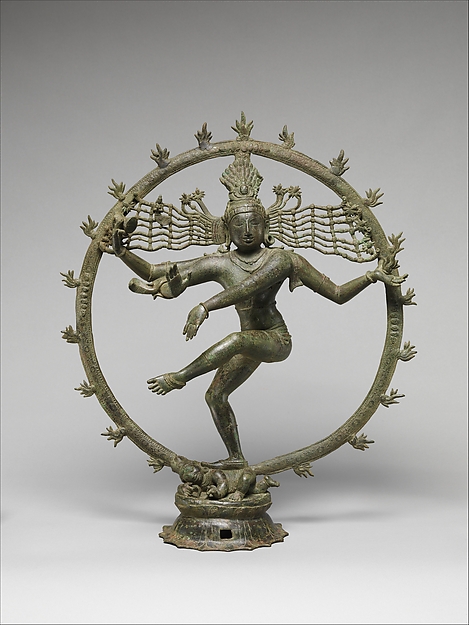 Shiva as Lord of Dance (Shiva Nataraja)Unreviewed
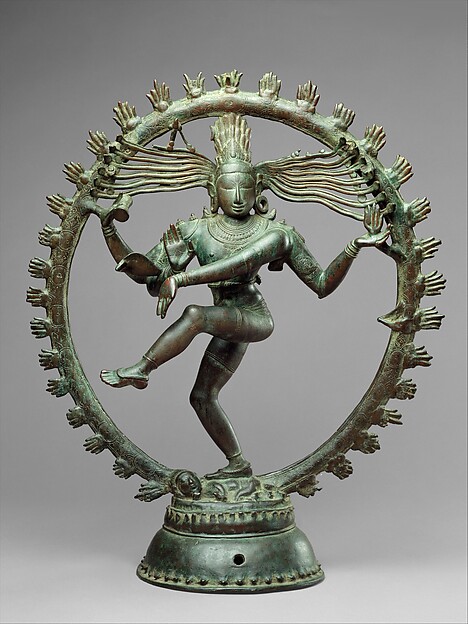 Shiva as Lord of Dance (Nataraja)Unreviewed
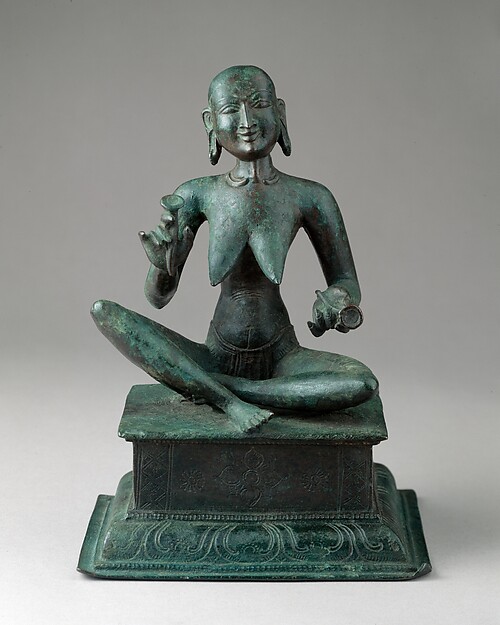 Karaikkal Ammaiyar, Shaiva SaintUnreviewed
 Yashoda with the Infant KrishnaUnreviewed
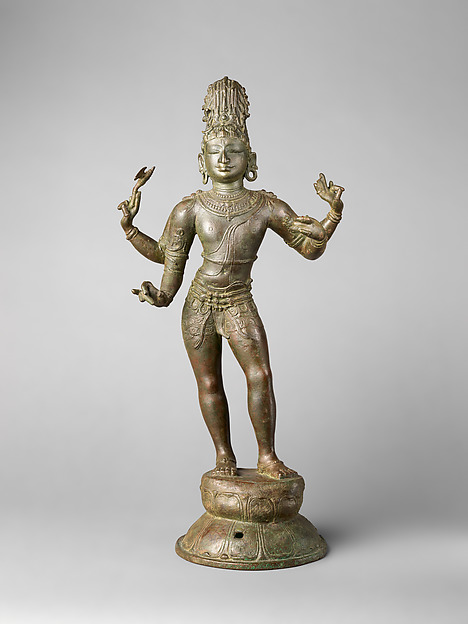 Shiva as Vanquisher of the Three Cities (Shiva Tripuravijaya)Unreviewed
 Hanuman ConversingUnreviewed
References
- 1Art-historical studies of Chola bronzes
Further reading
Corrections and additional sources: edit IND-190 on GitHub.